Modern tactical and industrial operations face three critical bottlenecks:
Vulnerability to Electronic Warfare (EW) due to reliance on active cloud connectivity and remote piloting;
Cognitive overload caused by rigid 1:1 operator-to-drone ratios;
Geopolitical or financial barriers that restrict access to advanced physical AI in developing regions.
These challenges leave critical infrastructure and ASEAN defense operations exposed to severe asymmetric threats in contested domains.
We engineer edge-native, decentralized hardware and software from the ground up to achieve Scalable Fleet Control, Garrison-Level Immunity, and Tailored ASEAN Deployability.
We don’t just build drones. Our core competitive advantage lies in our proprietary, modular AI and software stack. Our software submodules are platform-agnostic and can be decoupled to power third-party robotic assets downstream.
At the foundation of every IXEAN platform is SIAS (Swarm-Integrated Autonomous Systems).
SIAS is not merely an isolated product feature or software patch, but our foundational system philosophy and core operating system. SIAS serves as the overarching digital architecture, employing decentralized swarm intelligence to automate complex real-world workflows.
With SIAS, orchestrate onboard edge-compute nodes, secure localized peer-to-peer mesh networking, and immunize physical platforms against intensive electronic countermeasures. Natively executed within the SIAS ecosystem are our Core Software Technologies and our Full Robotic Platforms.

Novel edge neural network system matching the tracking accuracy of heavy industry benchmarks (YOLOv11/v26). Operating independently on a standard CPU processing stack at 40+ FPS, it eliminates reliance on specialized, supply-chain-restricted edge GPU hardware (e.g., Hailo series), radically slashing production costs. Includes dual RGB/Thermal architecture.

Enabling GPS-denied navigation with just an IMU (inertial data). A groundbreaking, true inertial odometry system featuring a custom Extended Kalman Filter and a neural network. Unlike benchmark systems that require heavy LIDAR or visual-inertial sensors, LANDAS estimates accurate global positioning purely through onboard accelerometer data. Ensures autonomous "Return-to-Home" and waypoint navigation capability even under total GPS denial.
Built on a lightweight C++ framework, DIWA governs autonomous navigation, predictive tracking (estimating coordinates even when a target breaks line-of-sight), and multi-agent swarm logic.
Combining Mata, Landas, and Diwa with our communication and networking technologies, we obtain our Swarm Integrated Autonomous System (SIAS) that is greater than the sum of its parts.
It provides a strong layer of protection to our robotic platforms from electronic warfare countermeasures, as it was intrinsically designed to operate with jamming and spoofing in mind.
Even if this information relay is compromised, since the drone was already in autonomous operation, SIAS ensures mission success is a high-probability outcome.
We believe that IXEAN Mata, Landas, and Diwa are the primary technological advantages we have in the market, most especially in the regional market.
They are valuable in and of themselves and can potentially be sold as submodules downstream to more applied and hardware-focused drone and robotics companies.
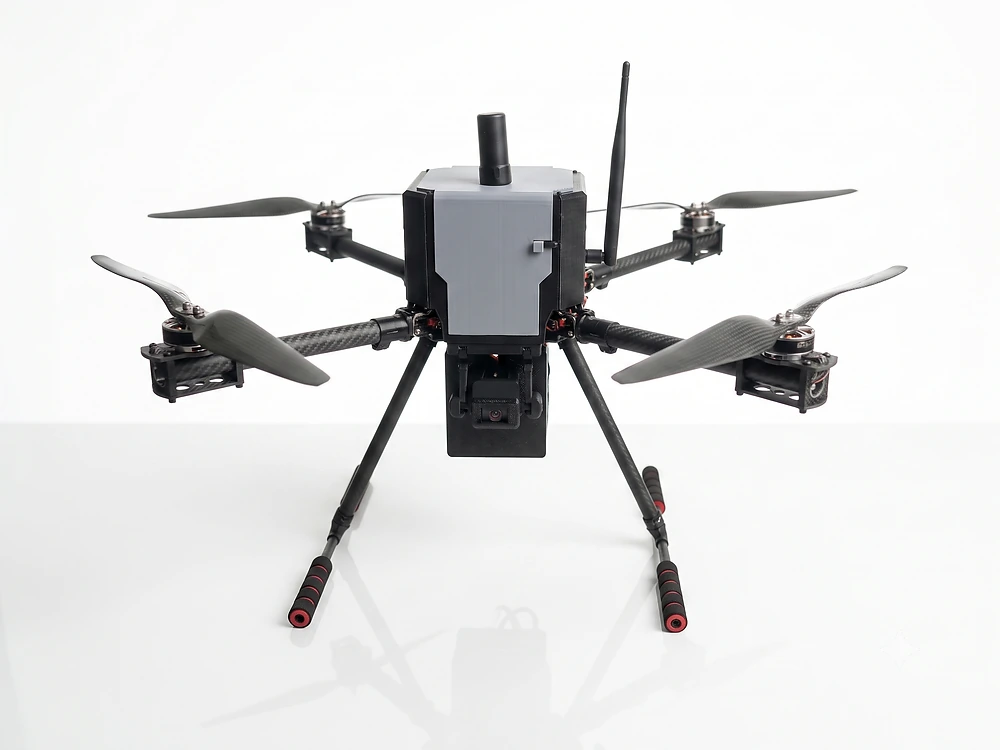
Persistent wide-area Intelligence Surveillance Reconnaissance (ISR) without the operator load.
LAWIN deploys as a coordinated fully autonomous swarm across complex terrain — collecting, processing, and distributing intelligence with no communications link, no cloud dependency, and no continuous operator input required after launch.
For commanders who need intelligence at range, in environments where conventional ISR goes dark.

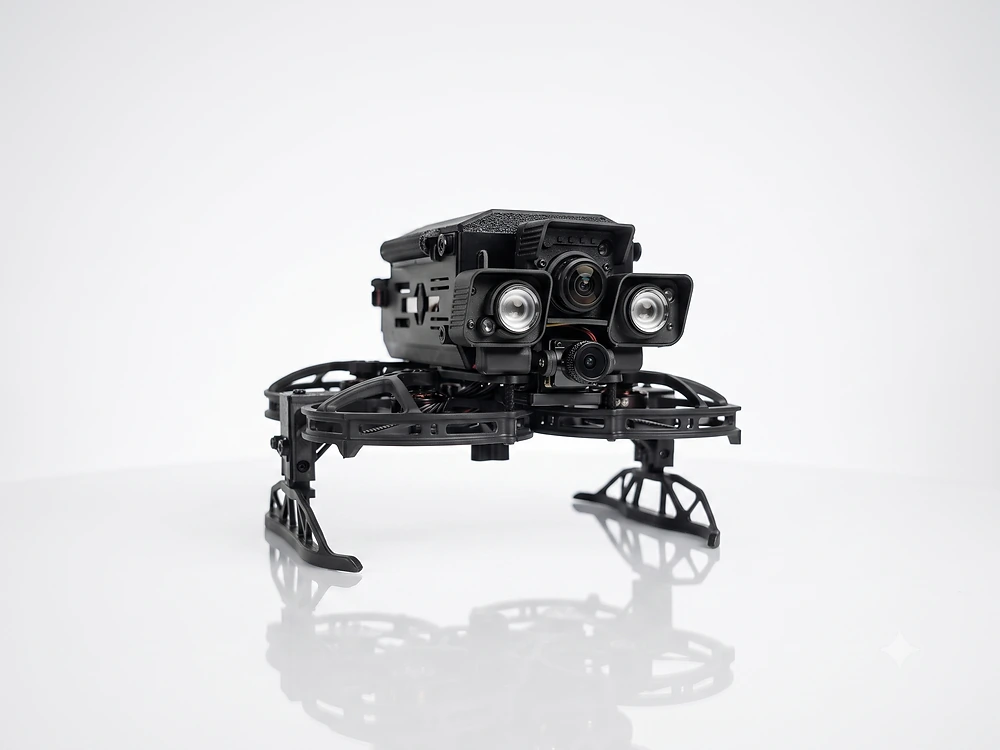
It takes only a split second to miss a tactical window.
UWAK is a quadcopter with night-vision and SIAS-powered automatic target detection. It operates in spaces no larger platform can reach, in conditions no human eye can work in, and in signal denied environments that disable everything else.
It gives your team intelligence before they move.


IXEAN Keris is an autonomous target-homing anti-UAS interceptor drone system. The Keris automatically launches and locks onto the enemy drone. Utilizes kinetic energy to safely neutralize hostile threats out of the sky before returning to its automated charging dock if it survives impact.
We do not simply build equipment. We engineer scalable solutions to complex physical challenges.
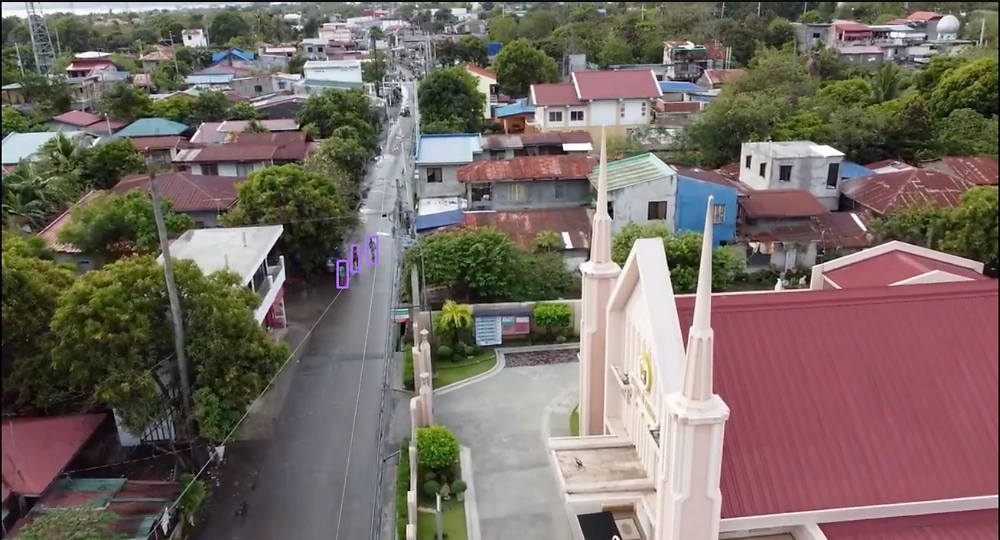
Lawin Urban prioritizes Public Safety & SAR. It aims to replace static CCTV blind spots in megacities like Metro Manila. Uses autonomous, street-following flight paths to bypass structural blockage, executing high-altitude thermal/RGB profiling. Critical for wide-area search and rescue during typhoon season.
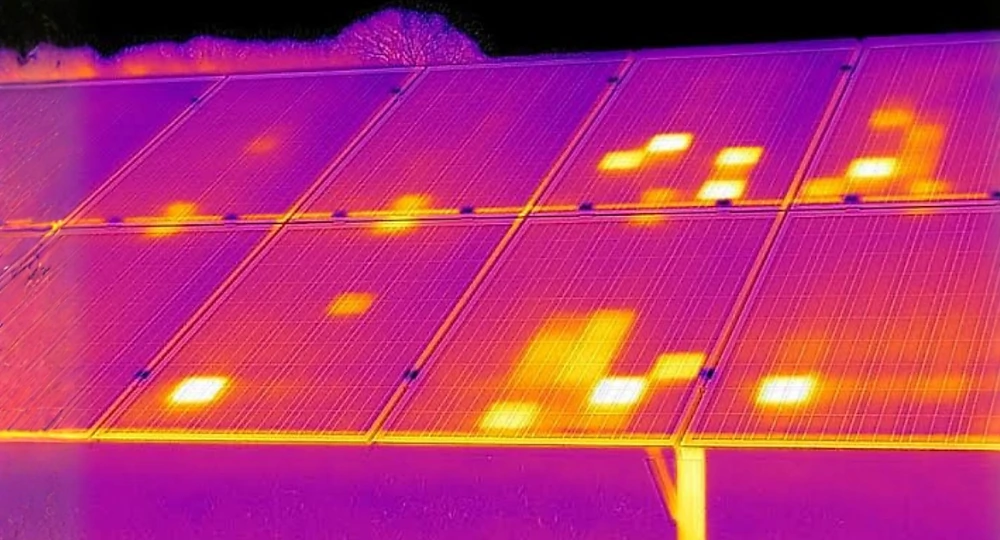
Lawin Solar’s main purpose is Infrastructure Diagnostics. It is designed to protect the long-term energy yields of world-class utility facilities. It deploys a swarm to track panel degradation, failing diodes, or micro-cracks that cause an invisible 30% drop in generation capacity before total component failure occurs.
IXEAN is a Filipino robotics startup dedicated to revolutionizing defense, security, and paramilitary solutions through cutting-edge artificial intelligence and robotics.
The company designs, builds, and fields autonomous systems from the ground up — controlling hardware, AI, and integration under one roof. Its flagship systems — IXEAN LAWIN and IXEAN UWAK — deliver full-to-semi-autonomous functionality that directly addresses three critical limitations of conventional drone technology: heavy reliance on manual remote-control piloting, vulnerability to electronic warfare countermeasures, and the operational difficulty of managing multi-drone systems under pressure.
IXEAN specializes in decentralized, AI-driven tools tailored to the operational realities of Southeast Asia.
Cost-effective, reliable solutions custom-built to solve your specific challenges.
Skip the middleman with top-tier support and 1-on-1 communication with our technical team.
Stay ahead of the curve through our deep-rooted partnerships with leading academic incubators.
Autonomous ISR and Counter UAS for commanders who cannot assume communications infrastructure will be available when the mission demands it.
Search and Rescue Operations after natural disasters. Monitor and survey key infrastructure.
Complete visibility across high-risk corridors where a single blind spot becomes an operational and financial liability.
Reliable, low-cost autonomous monitoring for land and crop management at scales manual operations cannot sustain.
Development updates. Operational insights. Thinking on AI, autonomy, and the future of defense technology in Southeast Asia.